
Experimental Facilities for Teaching and Research
Undergraduate Aerodynamics and Fluid Mechanics Laboratory
In the undergraduate aerodynamics laboratory, there are variety of experimental setups used for demonstrations and laboratory work in courses such as AEE 244 Fluid Mechanics, AEE 341 Aerodynamics I, AEE 342 Aerodynamics II and AEE 410 Aerospace Engineering Laboratory. These experiments teach students the fundamentals of fluid mechanics and aerodynamics. These equipment are used for laboratory works in Aerodynamics and Fluid Mechanics courses and also for laboratory and project works in AEE 410 course.
- Subsonic Wind Tunnel (AF100): An open circuit suction subsonic wind tunnel with a working section of 300 mm by 300 mm and 600 mm long. The subsonic wind tunnel includes:
- A frame mounting versatile data acquisition system (VDAS) to allow computer-based data capture for a wide range of TecQuipment products.
- A tilting 36-tube manometer for use with the AF100 Series Subsonic Wind Tunnel, other TecQuipment products, or as a general purpose instrument.
- A single component balance to measure the lift and drag forces on models mounted in an AF100 Subsonic Wind Tunnel.
- A three-component balance
- An Angle Feedback Unit
- Differential pressure unit to measure and display pressures with respect to the atmosphere or differential pressures.
- 32-Way Pressure Display Unit
- A traversing pitot static tube with electronic position measurement.
- Smoke generator
- Models (cylinder model, NACA 0012 airfoil with tappings, NACA 2412 Airfoil with flap, a set of NACA 0012 airfoil, flat plate drag model, boundary layer model, a low wing aircraft model, a high wing aircraft model)
- Air Flow Bench: This is a modular air flow bench providing basic airflow facilities to enable a wide range of practical airflow investigations. Suitable for demonstration, laboratory and project work at a basic level. The flow bench also includes a 14-tube multi-range water manometer. There exist 3 modular air flow bench in the department, 2 of which are from Lockheed Martin. Different experiments and demonstrations can be carried out by additional apparatus used with the bench as:
- Bernouilli’s equation apparatus,
- Drag force apparatus,
- Round turbulent jet apparatus,
- Boundary layer apparatus,
- Flow round a bend apparatus,
- Jet attachment apparatus,
- Flow visualization apparatus, and
- Tapped airfoil apparatus.
- The working section of the apparatus is 100 mm x 50 mm. Besides the department has a 6 channels of constant-temperature anemometer system, with various single, cross (double) and triple hot-wire probes and triple-quadruple split film probes basically used for recirculation flow measurement. Various data acquisition hardware and software systems are available for research and application purposes.
- Flow Visualization Wind Tunnel: A floor standing suction type subsonic wind tunnel with smoke visualization that allows demonstrations and student investigations into the flow of air around a wide variety of different shaped models.
- Flow Measurement Apparatus: The setup is used to investigate different ways of measuring flow including a Venturi meter, an orifice plate and a rotameter. At the same time shows applications of the steady flow energy equation (Bernoulli's equation).
- Hydraulics Bench: A mobile self-contained bench to provide a variable supply of water to a series of interchangeable bench-mounting or floor-standing hydraulic and fluid mechanics experiments. Different apparatus exist to be used with hydraulics bench system as Jet Trajectory and Orifice Flow apparatus, Flow Through an orifice apparatus, set of 4 different orifices, square and triangular orifices, flow meter calibration unit, pitot tube, venture flowmeter, orifice flowmeter, nozzle flowmeter, venture meter, friction loss in a pipe, impact of a jet apparatus, 120 degree conical impact plate, 30 degree inclined impact plate.
- Reynolds Number and Transitional Flow Apparatus: A self-contained bench-mounting apparatus that uses water to allow students to investigate laminar and turbulent flow and the conditions at the transition. A heater module for use with the Reynolds Number and Transitional Flow Apparatus also exists.
- Hele-Shaw Apparatus: A bench-mounting Hele-Shaw apparatus to demonstrate two- dimensional laminar flow around differently shaped models. A wall mounting header tank is used to provide a constant head water supply for the Hele-Shaw Apparatus.
- Hydrogen Bubble Flow Visualization System: This is also a very useful tool for our demonstrations to the students. The system is mainly used for Aerodynamics I and II courses to show streak lines, flow separation, boundary layer evolution, starting vortex, Von Karman vortex street behind a cylinder, etc.
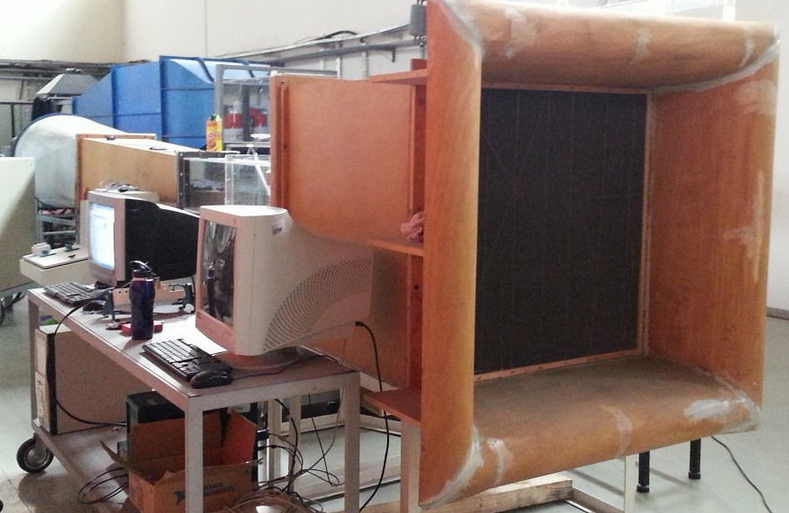
- Small Subsonic Research Wind Tunnel: This is a home-built, Eiffel type, variable speed (0 - 30 m/s) subsonic wind tunnel, having a test section of 0.3 m x 0.3 m and is used basically for demonstration and research purposes. The tunnel speed can automatically be controlled and regulated through a personal computer. Basic research in turbulence and flowfield measurements using pressure probes and hot-wire anemometry techniques are being conducted in this tunnel. A complete data-acquisition system is also incorporated to this facility for automated probe traversing and data collection during the experiments.
- Subsonic Research Wind Tunnel: This is an open-circuit suction type subsonic research wind tunnel with a 1 m x 1 m test section with a balance system.
- Supersonic Wind Tunnel: This is a blow down supersonic wind tunnel with a test section of 2 cm by 3 cm. The tunnel is driven by dry pressurized air stored at 14 bars which is supplied by means of a compressor of 7.5 kW capacity. The tunnel Mach number can be continuously adjusted between 1.2 and 3.4. The maximum tunnel run time is about 60 seconds (30 to 60 seconds, depending upon the Mach number). The tunnel is equipped with pressure taps on the wall of the test section and a support mechanism with angle of attack capability. There is also a complete Schlieren system for flow visualization and a video camera to record the experimental run and then to replay it for detailed description of the flow field. This tunnel is used mainly for demonstration and research purposes in high speed compressible gas dynamics.
- Other Research Facilities and Equipment:
- Rectangular Water tank made of glass (80 cm x 80 cm x 2m)
- Small Water tank made of glass (40 cm x 40 cm x 80 cm)
- Hexagonal Water tank made of glass (1.5 m height)
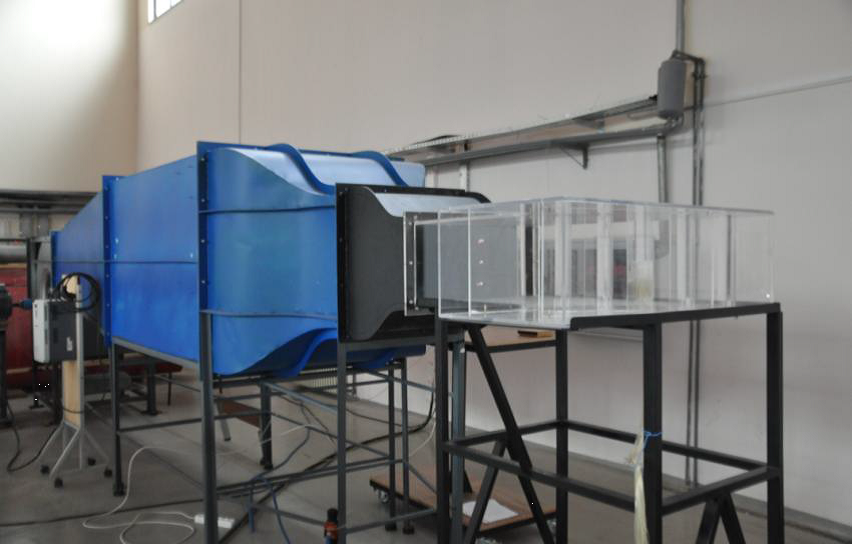
- METUWIND/RUZGEM C1: Small Scale Suction Type Wind Tunnel
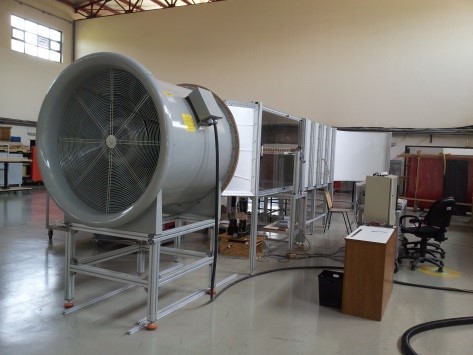
- METUWIND/RUZGEM C2: Continuous Flow Blower Type Wind Tunnel
- METUWIND/RUZGEM C3: Medium Scale Suction Type Wind Tunnel
- METUWIND/RUZGEM C4: Open-Jet Wind Tunnel
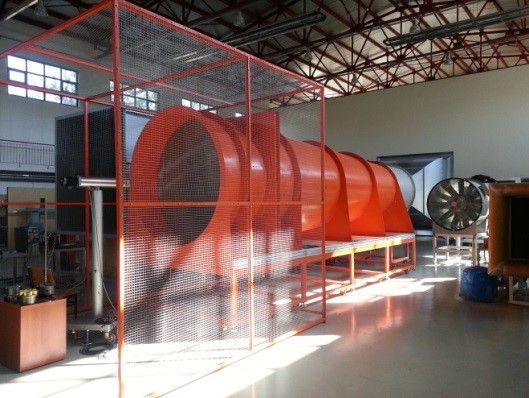
- METUWIND/RUZGEM Large Scale Wind Tunnel
- 3D PIV system
- 3D CTA system
- 3D traverse system
- Armfield 16 channel manometer
- Various pressure probes
- Demonstration Setups:

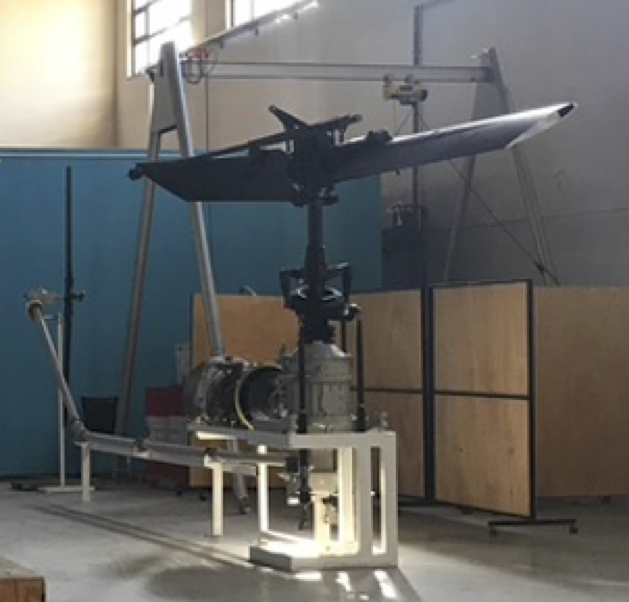
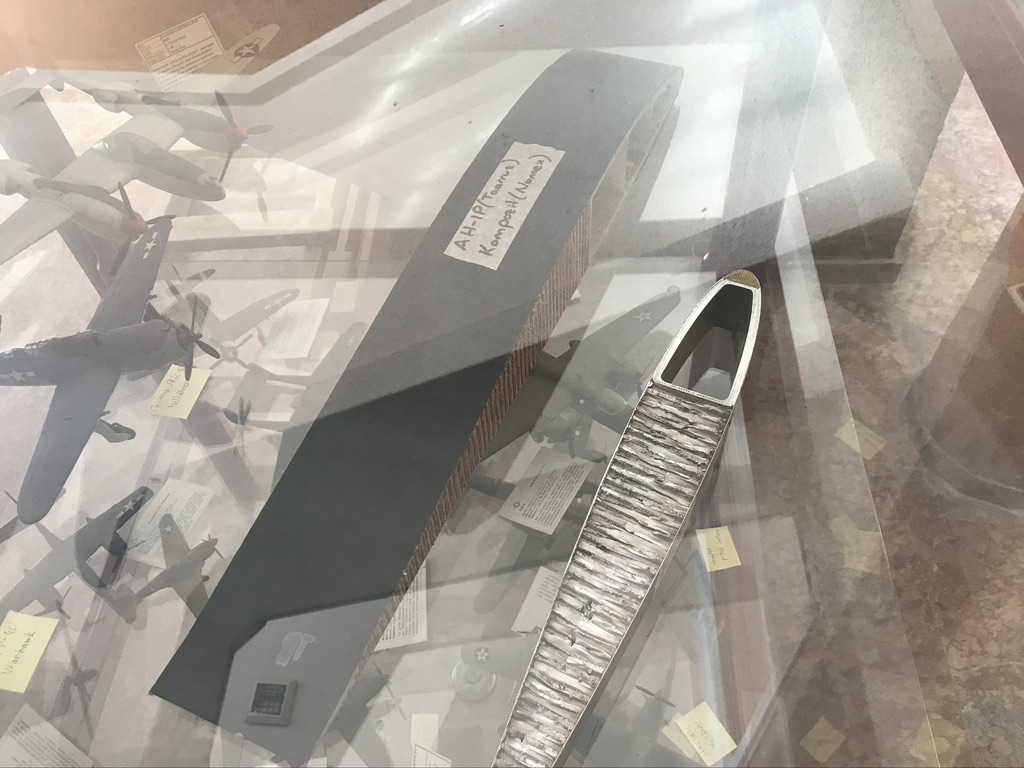
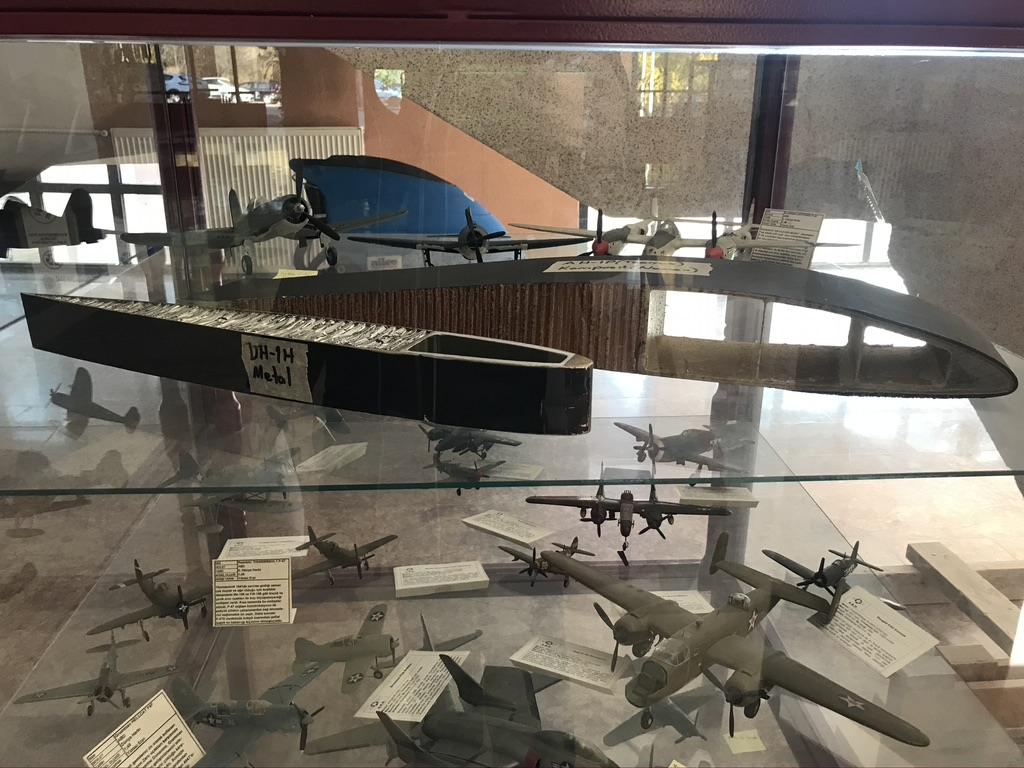
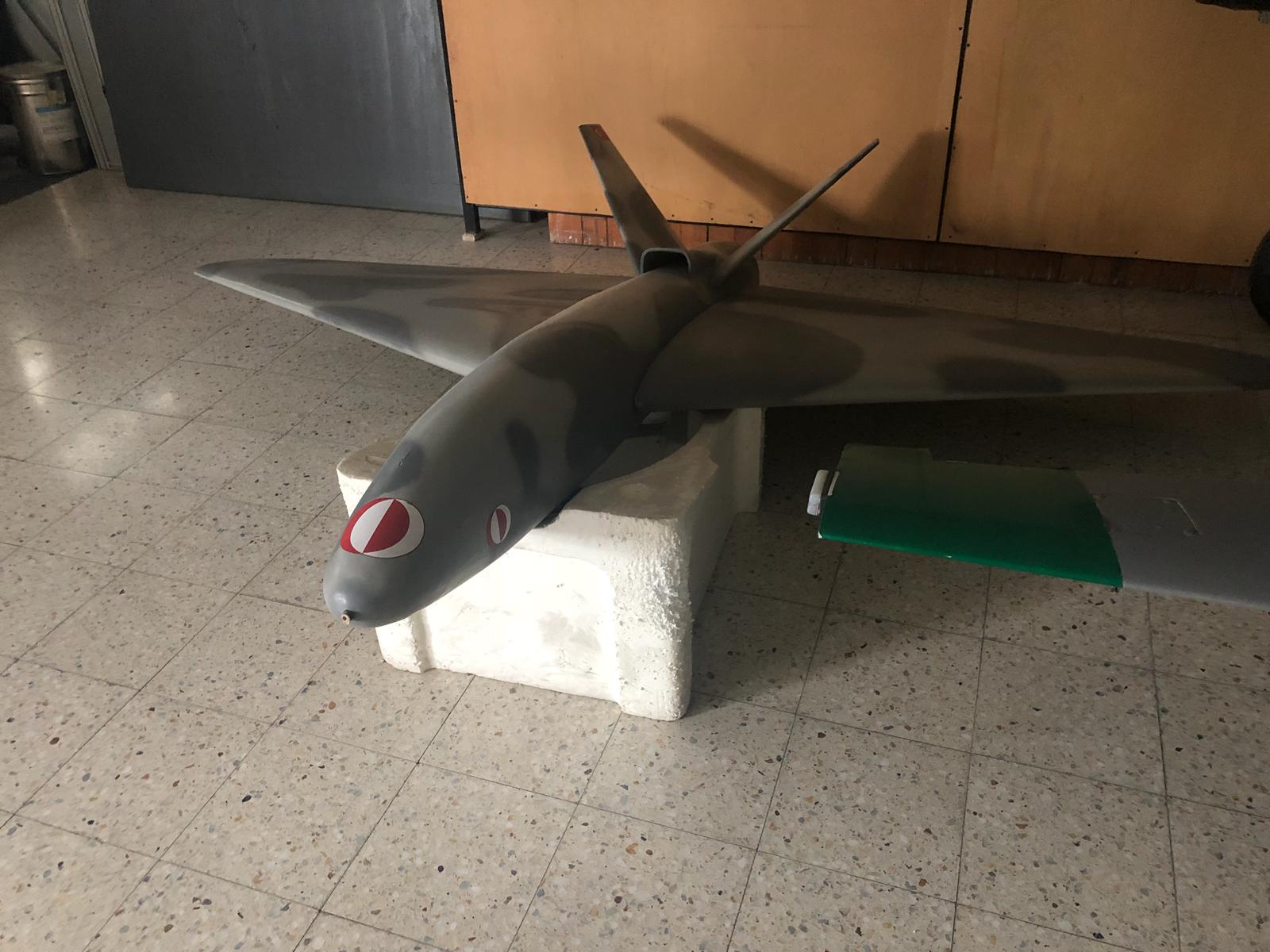
- Other Facilities at METU and ANKARA:
- Ankara Wind Tunnel of TÜBİTAK-SAGE: This is the oldest industrial scale wind tunnel of Turkey, with a test section of 3.5 x 2.5 m2 and 6 m in length, equipped with an overhead six component external electo-mechanical system. The tunnel is of closed circuit type with a maximum velocity of 100 m/s in its closed test section. Graduate students of Aerospace Engineering Department can perform academic and industry supported research activities in this wind tunnel.
- Large Subsonic Wind Tunnel of Civil Engineering Department: This is presently the largest operational wind tunnel in Turkey. The maximum size of the test section is 6 m by 1.5 m. The maximum velocity at this section is 20 m/s. It is of the once-through type and is equipped with a facility to create temperature gradient for meteorological studies and air-pollution problems. It is housed in the Hydromechanics Laboratory of the Civil Engineering Department.
- Small Wind Tunnel of Civil Engineering Department: This is a closed circuit type wind tunnel with a test section of 0.3 m x 0.4 m and a maximum velocity of 30 m/s. It is also housed in the Hydromechanics Laboratory of the Civil Engineering Department.
- Subsonic Wind Tunnel of Mechanical Engineering Department: This is a once-through type wind tunnel with a test section of 0.5 m x 0.6 m and a maximum velocity of 40 m/s. It is housed in the Mechanical Engineering Department.
- Supersonic Wind Tunnel of Mechanical Engineering Department: This is the first supersonic wind tunnel to be designed and manufactured completely in Turkey. It sustains a Mach number of 1.75 for a maximum duration of 32 seconds. It has a cross-section of 50 mm x 100 mm. It is also housed in the Mechanical Engineering Department. It is equipped for flow visualization and has three component balance.
Aerodynamics and Fluid Mechanics Research Laboratories
- Student Design Projects:
- A Very Light Light Aircraft Project, METU, Turkish Aerospace Industries, 2017-...
- Ko-İHA Project, METU, Roketsan, 2019-2019.
- MAV Aerodynamics Laboratory
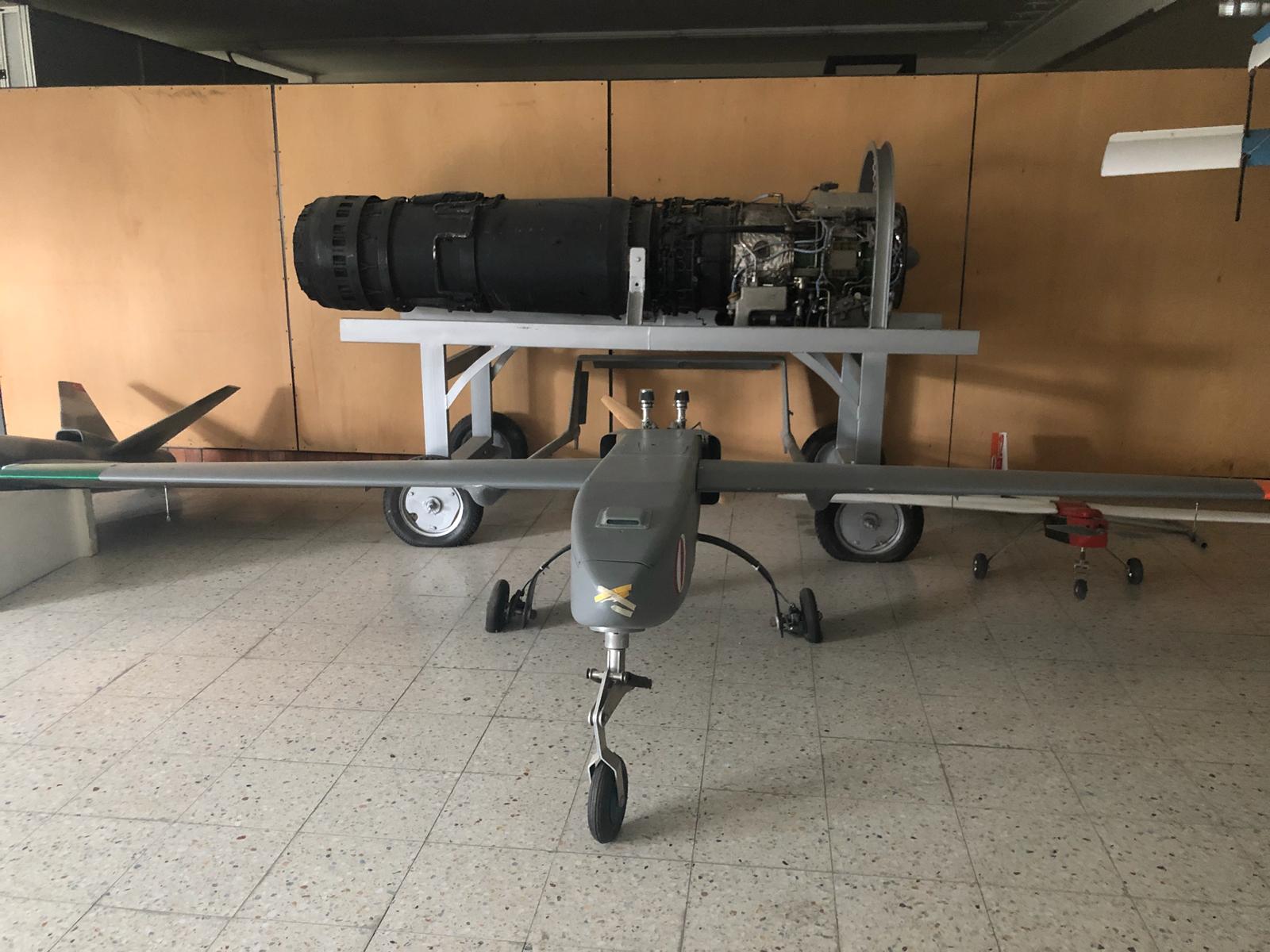
- UAV Aerodynamics Laboratory
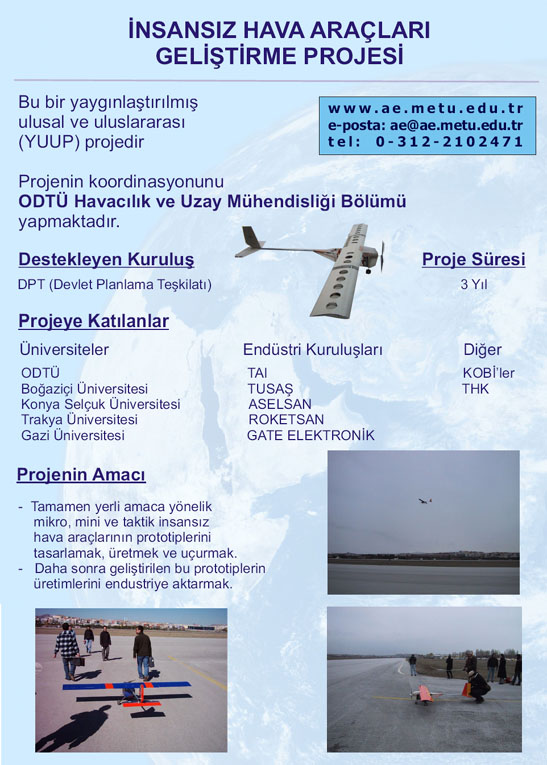
- UAV Development Project: YUUP Project, METU, DPT, 2004-2007.
- RÜZGEM Experimental Aerodynamics Laboratory
- RÜZGEM Computational Aerodynamics Laboratory
- High Performance Computing Laboratory
- RÜZGEM - Rüzgar Enerjisi Teknolojileri Araştırma ve Uygulama Merkezi / METUWIND - Center for Wind Energy Research

Last updated